

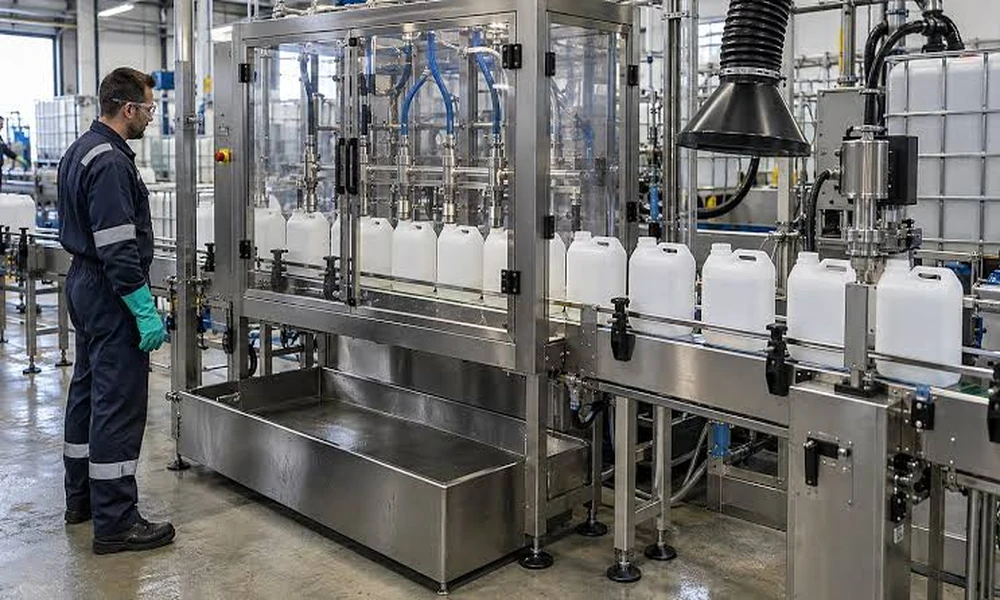
Bulk liquid handling is often treated as simply a scaled-up version of smaller container filling, but a 200-litre drum introduces weight, spillage and vapour risks that a pail or bottle simply does not carry. Manufacturers who apply small-container assumptions to drum-scale operations frequently underestimate the safety measures involved. A properly specified drum filling system is built specifically around these larger-scale risks, not adapted from equipment designed for smaller containers.
Why Drum-Scale Filling Carries Different Risks
A full drum can weigh several hundred kilograms, making manual positioning and manoeuvring both physically demanding and hazardous if a container tips or a hose disconnects under pressure. Vapour build-up from certain chemicals also becomes a more serious concern at this scale, where enclosed handling areas need proper ventilation and containment. A hose failure or a sudden disconnection under pressure at this scale can release product far faster than an operator can react to, which is why equipment design has to anticipate the failure rather than rely on quick reflexes.
Core Safety Features to Look For
Automatic shut-off valves that trigger on target weight, overfill sensors, and spill containment trays beneath the filling head are baseline features rather than optional extras for drum-scale equipment. Earthing and bonding provisions matter as well for flammable or static-sensitive liquids, since a static discharge during transfer can be a genuine ignition risk. Emergency stop controls positioned within easy reach of the operator’s normal working position are equally important, even though they rarely get used.
IBC Compatibility Alongside Drums
Many facilities run both standard drums and intermediate bulk containers through the same line, and switching between the two formats manually introduces delay and inconsistency at the filling head. An IBC and drum filling station built for both formats avoids the need for separate equipment or a lengthy manual reconfiguration between runs.
Handling Hazardous and Corrosive Liquids
Chemicals classified as corrosive or hazardous require filling equipment built from compatible materials, sealed transfer paths that minimise operator exposure, and often a dedicated extraction system to manage fumes. Cutting corners here is not just a safety issue; it can also mean equipment fails prematurely when product attacks seals or fittings not rated for it. Material compatibility charts supplied by the equipment manufacturer are worth checking line by line against your actual product rather than assumed on the basis of a similar chemical.
Weight-Based Accuracy at Drum Scale
At this volume, even a small percentage error in fill accuracy represents a significant amount of product, so weight-based dosing rather than a fixed timed fill is generally worth the extra cost. Automatic shut-off tied to a target weight also doubles as a core safety feature, preventing overfilling that could otherwise cause spillage or a pressurised container. Load cells used for this purpose need periodic calibration checks, since a drifting sensor can undermine both the accuracy and the safety function it is meant to provide. Keeping a calibration log alongside the maintenance schedule makes it easier to spot gradual drift before it produces a visible fill-weight complaint.
Reducing Manual Handling of Heavy Containers
Roller conveyors, drum lifters or automated positioning reduce how often staff need to physically push, tilt or lift a full drum, which is where a large share of manual handling injuries in bulk liquid facilities originate. Removing this manual step is often the single biggest safety improvement a drum filling upgrade delivers. It also reduces the physical toll on experienced staff, who otherwise bear the brunt of repetitive heavy lifting over a long career on the production floor.
Spill Containment and Cleanup Planning
Even well-designed systems should be paired with containment sumps and a documented spill response procedure, since the consequences of a drum-scale spill are considerably more serious than a smaller container mishap. This planning is a regulatory expectation in many jurisdictions, not simply good practice. Running a periodic spill drill also helps confirm that the procedure works in practice, not just on paper.
Throughput Expectations at Scale
Drum filling is inherently slower per cycle than smaller container filling given the volumes involved, so throughput comparisons should be made in terms of total litres transferred per hour rather than containers per minute. This framing gives a more realistic picture of how a system performs against production targets. Comparing suppliers on containers-per-minute alone can be misleading when drum and pail volumes differ significantly between quotes.
Maintenance for Safety-Critical Components
Shut-off valves, overfill sensors and earthing connections are safety-critical and should be tested on a defined schedule rather than only when something appears to malfunction. A documented maintenance log for these components also supports insurance and regulatory compliance in the event of an incident review, and it gives new staff a clear record of what has already been checked and when.
Choosing a Drum Filling System for Your Facility
Start from the hazard classification of your product, since that determines the baseline safety features you cannot compromise on regardless of budget. From there, weigh throughput needs and IBC compatibility against cost. A well-specified drum filling system should make bulk transfer safer as well as faster, not one at the expense of the other.