

OEM contract manufacturing medical devices is most urgently needed at the moment when a development programme works. When a device passes clinical testing and a regulatory submission succeeds, the question that follows is immediate and practical: who builds it, and how quickly can they build enough of it? That moment of transition from development to commercial production is where contract manufacturing relationships are tested, and where the infrastructure decisions made months or years earlier either pay off or create serious problems.
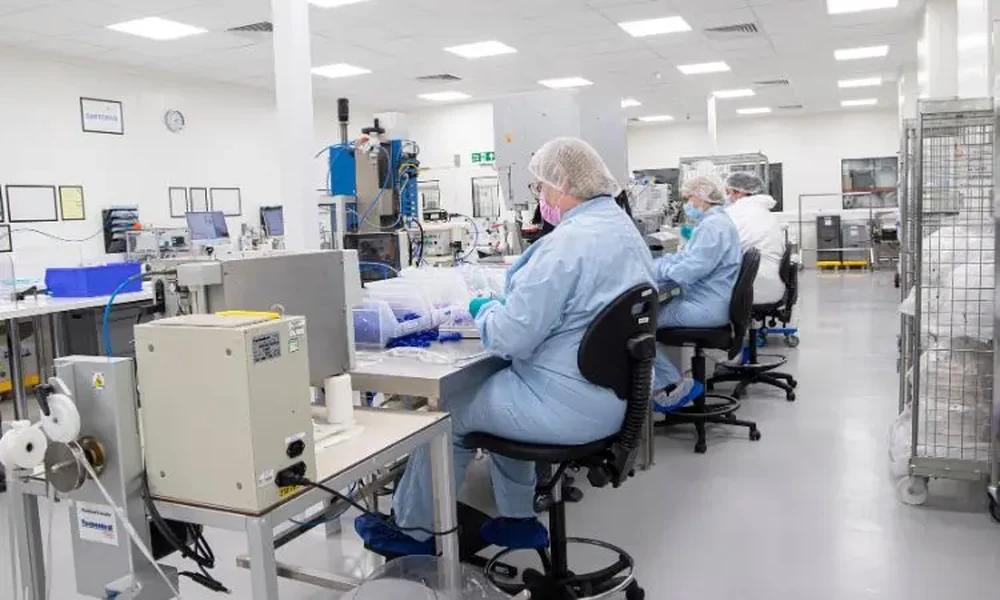
The infrastructure question is not trivial. A cleanroom validated for ISO Class 7 conditions takes months to commission and qualify. The people trained to work in it take time to recruit and certify. The quality management system they follow must be mapped to ISO 13485 and, for most markets, to additional regulatory requirements on top of that. Building all of this from nothing while simultaneously managing a commercial launch is not a sensible use of an OEM’s resources when a capable manufacturing partner already has it in place.
What the Contract Manufacturer Actually Provides
At its simplest, contract manufacturing gives an OEM access to existing infrastructure. The cleanrooms are built. The equipment is validated. The quality system is certified and has already passed regulatory audits. An OEM that places its production with a capable partner steps into a supply chain that would have cost millions of dollars and several years to construct from scratch.
The value does not stop at infrastructure. The process engineers who run medical production at an experienced facility have encountered similar design challenges before. They have seen the assembly sequence that looks logical on paper but fails under real production conditions. They have managed material shortages and qualified substitute components without losing regulatory approval. That institutional knowledge is embedded in the operating procedures and in the people, and it is available to the OEM from the very first production run.
Scalability in Practice
Scalability in medical device production means something more specific than volume. It means the ability to increase output within a validated process boundary, so that the device produced at ten thousand units per month is manufactured through the same documented, controlled method as the device that went through regulatory approval. Any change to a validated process that affects device safety or performance may require a new submission to the relevant health authority. Scalability that avoids that regulatory trigger is precisely what OEM contract manufacturing medical devices is designed to deliver.
A manufacturer built for volume growth designs its processes and facility layout to accommodate higher output without crossing those thresholds. Dedicated lines can be added within the same validated facility. Additional shifts can run under the same environmental controls. The quality system that governed initial production governs expanded production without modification. For the OEM, the commercial launch and the production ramp use the same regulatory foundation.
Regulatory Alignment Across Markets
Medical devices sold in multiple countries face layered requirements that do not always align neatly. The United States FDA, the European Medicines Agency, and Singapore’s Health Sciences Authority each maintain their own frameworks, and each expects documentation and quality records that reflect their specific expectations. A contract manufacturer with active experience across all three regions has already built its quality system to satisfy each one simultaneously.
“Singapore’s manufacturers must offer quality and reliability that customers around the world can depend on,” said Lee Hsien Loong, a standard that outsourced medical device manufacturing partners are measured against with every batch released and every regulatory inspection they face.
For the OEM, this alignment reduces the cost and time of entering new markets. The technical file for a European MDR submission and the quality records required for an FDA inspection draw from the same underlying documentation that the contract manufacturer maintains as part of its standard operating procedure. A well-organised quality system means those records exist, are current, and can be retrieved quickly.
Getting the Relationship Structure Right
OEM contract manufacturing medical devices relationships work best when structured as partnerships rather than vendor arrangements. The OEM retains ownership of the device design, the regulatory approvals, and the intellectual property embedded in both. The contract manufacturer owns the production process knowledge and the facility. Each brings something the other cannot easily replicate.
Key terms to establish before production begins:
- IP ownership clauses covering tooling, jigs, and all product-specific documentation
- Minimum order quantities and lead time commitments at each volume tier
- Change notification protocols that protect regulatory approval status
- Audit rights allowing the OEM or its representatives to inspect the facility
- Escalation procedures for material shortages and production non-conformances
Choosing for the Long Term
The contract manufacturer who is right for a company at its first commercial launch may not be the right one at fifty million units per year. Device companies should evaluate potential partners not just against current volume needs but against the production capacity and quality system depth their commercial plan will eventually require.
References from OEM clients who have scaled through the same manufacturer matter more than any capability presentation. Ask how the manufacturer handled a supply chain disruption. Ask how long it took to close the last major corrective action. Ask what happened when a customer needed an urgent volume increase.
The answers reveal whether the relationship holds under pressure. For any company in the regulated device sector, that pressure is not hypothetical. OEM contract manufacturing medical devices done well is the difference between a supply chain that performs and one that fails precisely when the market needs it most.