

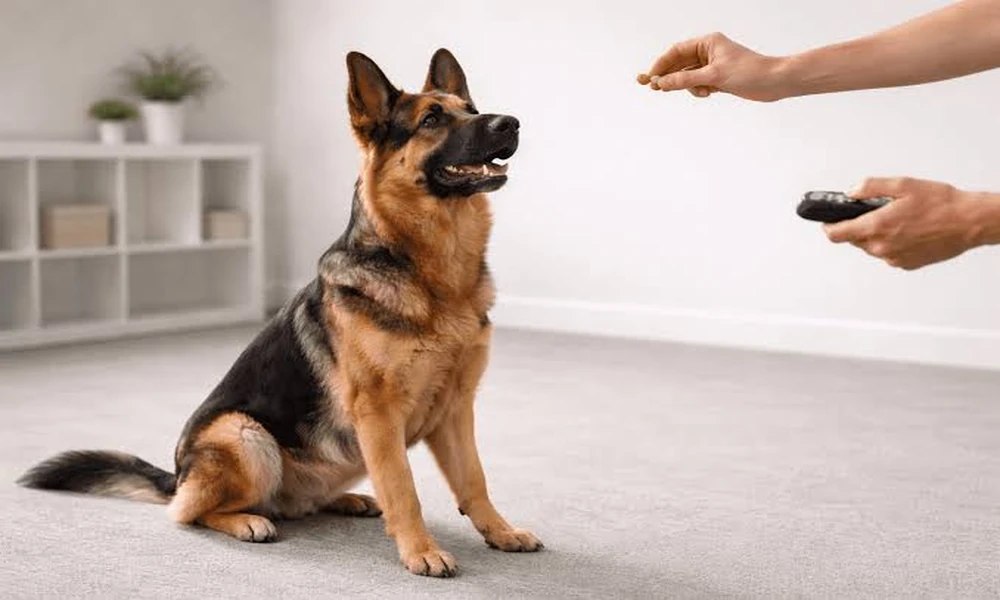
Buying a trained adult German Shepherd is a big investment. Many families in the US and UK pay several times the price of a puppy for a dog that already walks nicely on a lead, comes when called, settles in the house, and can be trusted around visitors. Then they bring the dog home, and within a few weeks something slips. It pulls on walks, ignores a recall, or barks at the window all afternoon.
Usually the dog has simply moved to a new home, with new people, rules, and routines, and its training needs to be rebuilt around them. The first month decides whether the dog’s training holds.
Why trained dogs lose ground after a move
Dogs learn behaviour in a context. A Shepherd that responds instantly to its trainer, in its familiar training field, has learned to respond to that person, in that place, with that tone of voice. Move it to a different house, with a new handler who uses slightly different words and gestures, and some of that reliability drops.
Stress plays a part too. Even a confident, stable dog finds a change of home unsettling. It may be more alert, more vocal, or more easily distracted for a while. And new owners often relax the rules without meaning to, letting the dog on the sofa one day and not the next, or repeating commands several times before insisting.
The good news is that a well-trained dog relearns quickly once the new handler is consistent.
Before the dog comes home
Preparation makes the first weeks easier. Ask the seller for a written list of every command the dog knows, with the exact words and hand signals they use. Find out the dog’s daily routine: feeding times, walks, where it sleeps, and whether it’s used to a crate. Keep the same food for the first few weeks.
Agree on house rules as a family before the dog arrives. Is it allowed on furniture? Which rooms are off limits? Who feeds and walks it? Shepherds are quick to spot inconsistency, and one person allowing something everyone else forbids will undo the rules for all of them.
If the seller offers handler training, take as much as you can. A few days learning to handle the dog with the trainer present is the most valuable part of the purchase.
Week one: calm, routine, and bonding
The first week is about trust. Keep things quiet. Limit visitors, avoid busy places, and stick to a predictable routine. Short, calm walks around the neighbourhood help the dog learn its new surroundings.
Hand feeding some of its meals, gentle grooming, and short, easy training sessions with plenty of rewards help the dog bond with its new handler. Use the commands it already knows, in the same words the trainer used, and reward generously when it gets them right.
Expect some testing. A dog may check whether old rules still apply. Calm, consistent responses settle this faster than raised voices.
Weeks two and three: rebuilding reliability
Once the dog seems settled, start practising commands in more places and with more distractions. Train in the garden, then on quiet streets, then in a park at a quiet time. Increase the difficulty slowly. If the dog struggles, go back a step.
Practise recall on a long line rather than off lead at first, so you can always help the dog succeed. Practise loose lead walking, settling on a mat, and waiting at doors and gates.
Short sessions work best: five to ten minutes, a few times a day, rather than one long session. Shepherds are intelligent and often enjoy training, so ending each session while the dog is still keen keeps it motivated.
Week four: real life
By the end of the first month, most dogs are ready for more normal life: visitors to the house, café terraces, vet visits, and car journeys. Introduce these one at a time, and keep rewarding calm behaviour.
If the dog has protection training, follow the supplier’s guidance closely. Protection skills should only be practised with experienced trainers and proper equipment. In daily life, the focus should be on control and calm behaviour around ordinary people, which is what keeps a protection-trained dog safe to live with.
Exercise and mental work
German Shepherds were bred to work. The American Kennel Club’s German Shepherd Dog breed profile describes them as large, agile, and highly intelligent, and a dog with that combination needs daily physical exercise and mental challenge. Without it, many Shepherds find their own jobs, such as barking, chewing, or guarding the window.
Long walks, play, scent games, puzzle feeders, and regular short training sessions keep a Shepherd content. Many owners in the US and UK also join training clubs for obedience, tracking, or dog sports, which keeps the dog’s skills sharp and gives it an outlet for its drive.
When to call the trainer
Small setbacks are normal. Call the seller or a qualified trainer if the dog shows aggression toward family members or visitors, if fear or anxiety seems to be getting worse, or if a behaviour you were told it knew has broken down completely. Most reputable suppliers expect a few calls in the first months and are happy to help.
The months ahead
A trained Shepherd’s skills last when they’re used. Keep practising commands in daily life, keep house rules consistent, and book refresher sessions with a trainer every so often. A month of patient, consistent work at the start usually means years of the reliable, well-mannered companion you paid for.