

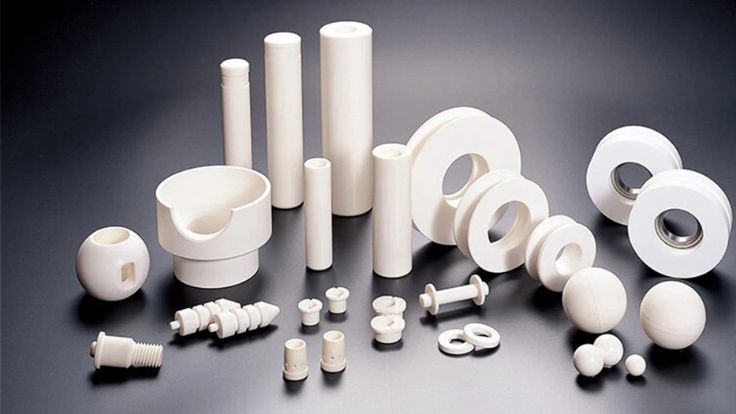
Ceramic injection molding presents us with one of those questions that seems purely technical until you examine it more closely: why do some manufacturing processes endure and expand across industries, while others remain confined to narrow niches or disappear entirely? The answer, as with so many questions about how human societies develop their tools and technologies, lies in the match between a process’s capabilities and the problems civilisation needs to solve. CIM has expanded because the problems it solves are becoming more numerous, not fewer.
The Design Freedom That CIM Provides
Consider what technical ceramics require of any manufacturing process. They are, in their sintered form, among the hardest and most chemically inert solid materials that industrial production works with. Those properties, hardness, electrical insulation, chemical resistance, and thermal stability, are precisely what make ceramics valuable. They are also what makes ceramics so difficult to shape after sintering is complete. Machining hardened ceramic is possible but slow, expensive, and constrained in the geometries it can produce. Pressing is limited to simpler forms. Casting struggles with dimensional consistency at fine scales.
Ceramic injection moulding resolved this constraint by approaching the shaping problem from a different direction entirely. Instead of forming the ceramic after sintering, it forms the component before sintering, while the material is still mixed with a flowable binder that allows it to fill a complex mould cavity under heat and pressure. The mould defines the geometry. The subsequent thermal processing, debinding and sintering, converts that shaped green body into dense, functional ceramic with all the properties the application requires.
The geometric freedom this provides is considerable. Internal channels, undercuts, thin walls, threaded features, and intricate cross-sections can be produced in CIM ceramic components with the same design latitude that plastic injection moulding offers for polymers. That comparison is instructive. Just as plastic injection moulding transformed what designers could specify in polymer components, ceramic injection moulding extended equivalent freedom to a category of materials that designers had previously been forced to treat as difficult and geometrically limited.
Design Principles That Govern Successful Parts
That freedom, however, is bounded. Understanding the boundaries is as important as understanding the capabilities, and here the analogy with other manufacturing processes is useful. Every forming process has design rules that reflect the physics of the process itself. Ignoring them produces defects. Working within them produces parts that perform.
The principles that experienced CIM component designers follow include:
Uniform wall thickness
Differential shrinkage during sintering, caused by variations in section thickness, produces warpage and dimensional inconsistency. Gradual transitions where variation is unavoidable reduce the risk considerably
Generous internal radii
Sharp internal corners concentrate sintering stresses and initiate cracks. A minimum internal radius of 0.5 millimetres is a practical starting point for most ceramic materials
Appropriate draft angles
Surfaces parallel to the direction of mould opening need sufficient draft, typically at least one degree, to allow clean ejection without damaging the green part
Stable large surfaces
Unsupported flat areas are prone to warpage under sintering stress. Ribs or curvature can be incorporated to provide stability without unnecessary mass addition
Gate placement and parting line location
Where the feedstock enters the mould cavity affects both flow patterns and particle orientation within the green part, which in turn influences the mechanical properties of the sintered component
Materials and Their Processing Implications
Different ceramic materials impose different constraints on the CIM manufacturing process, and the choice of material is inseparable from the design decisions that follow. Alumina, the most widely processed material in ceramic injection molding production, sinters predictably across a relatively wide temperature range and tolerates most furnace atmospheres without special precautions. Its behaviour is well characterised, which gives process engineers a reliable foundation for setting parameters and holding tolerances.
Zirconia demands more. Its phase transformation behaviour, the shift between crystalline structures that occurs at specific temperatures, must be managed carefully during sintering to avoid defects that compromise mechanical performance. Silicon carbide and silicon nitride, used where extreme temperature resistance is the primary requirement, need specialised furnace atmospheres and temperatures that add both process complexity and cost.
Singapore’s ceramic injection moulding manufacturers have built their competitive position around alumina and zirconia processing for medical device and electronics applications, operating within quality systems certified to ISO 13485 and supported by precision metrology infrastructure. The country’s ability to supply CIM components to Asia Pacific supply chains while simultaneously meeting the documentation and traceability requirements of North American and European regulated markets reflects an investment in technical and quality capability that has accumulated over decades.
Where the Process Delivers the Greatest Value
The applications where ceramic injection moulded parts consistently outperform alternatives are those that combine demanding material performance with geometric complexity. They include:
Medical and dental devices
Orthopaedic bearings, surgical instrument components, and dental restorations in biocompatible ceramic grades
Electronics and semiconductors
Substrates, insulators, and sensor housings requiring simultaneous electrical performance and thermal stability
Industrial wear components
Pump seals, valve seats, and nozzle parts in chemically aggressive or abrasive environments
Automotive systems
Fuel injector components and sensor housings requiring heat resistance at production volumes
Analytical instruments
Flow cells and sample holders where chemical inertness and material purity directly affect measurement integrity
A Technology Shaped by Its Problems
Technologies do not develop in isolation. They develop in response to problems that existing methods cannot solve. Ceramic injection moulding developed because the need for complex, high-performance ceramic components outgrew what pressing, casting, and machining could provide. It has endured and expanded because that need has only grown. As electronics miniaturise, medical devices grow more precise, and industrial environments more demanding, the relevance of ceramic injection molding will only deepen.