

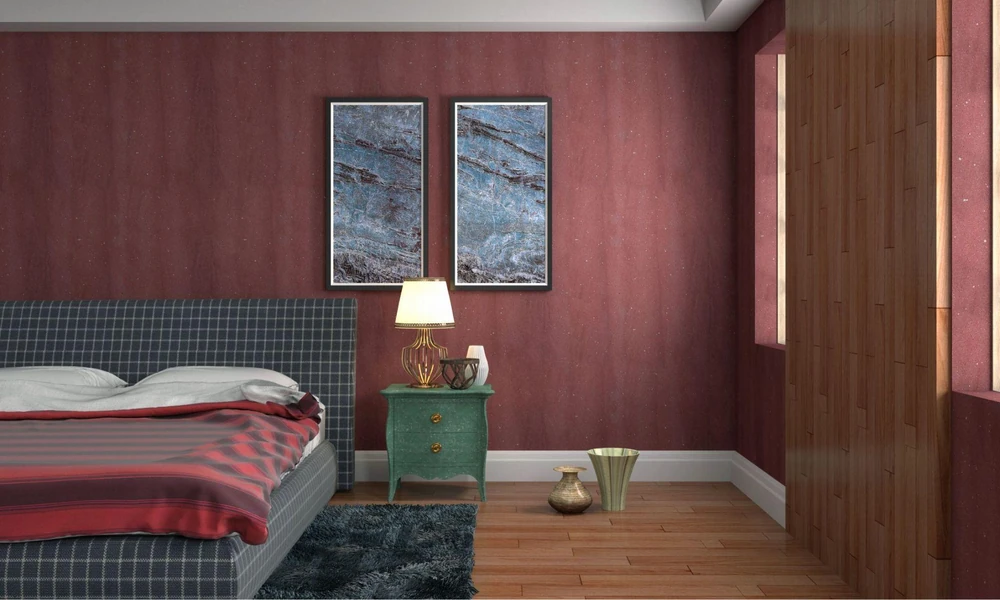
Maroon walls bring depth to a room, while wood and stone add natural variation. The combination can look balanced when each material has a clear role. This approach also prevents the room from depending on a single bold colour for all of its visual character and warmth.
The wall may act as the main colour, with timber adding warmth and stone introducing a quieter, grounded surface. Before finalising anything, compare all three finishes in the room’s actual light.
Begin with the Maroon Undertone
Maroon may lean towards red, brown or purple. That undertone affects which wood and stone finishes will sit comfortably beside it.
When considering texture wall paints, first decide whether the maroon wall should appear smooth, softly textured or strongly defined. A restrained texture usually allows the natural grain of wood and the pattern of stone to remain visible without making the wall feel crowded.
Choose Wood That Balances the Wall
Wood should soften maroon rather than compete with its depth. Medium and dark brown finishes often create a connected palette, while pale timber can provide a clearer break.
A well-planned Maroon colour combination also considers the undertones already present in doors, flooring and fixed furniture. Red-toned wood may strengthen the warmth of maroon. Neutral brown wood can steady it, whereas greyed timber may suit a cooler, purple-leaning shade.
Keep connected wooden elements within the same finish family. Too many unrelated stains can make the room feel pieced together.
Select Stone with a Quiet Pattern
Stone brings its own colour movement, veins and surface changes. Beside a deep wall, a calm stone finish is usually easier to manage than one with a busy pattern.
Consider these points before selection:
- Warm beige stone can soften brown-based maroon.
- Grey stone may support a cooler maroon undertone.
- Cream stone can create a lighter transition.
- Dark stone needs enough light and visual space.
Check a full sample rather than a small photograph. The scale of the pattern matters once it covers a larger area.
Use Texture on One Main Surface
Maroon, timber grain and stone pattern already introduce several visual layers. Adding strong texture everywhere can weaken the effect of each material.
Impressions Ideaz may be considered for an interior feature wall where a matte textured finish is preferred. Its relevance lies in allowing different design effects through application tools. Keep the chosen pattern measured so it supports nearby wood or stone instead of imitating them.
Match the Finish Levels
The amount of sheen should be considered across the complete scheme. A glossy wooden surface beside polished stone and reflective wall paint may create too much glare.
A matte or low-sheen maroon wall can give wood grain and stone texture more room to show. Where the wall has a decorative finish, keep at least one of the surrounding materials visually quiet. This helps the eye understand which surface is meant to lead.
Test Everything in the Same Light
Place wall, wood and stone samples together. View them during the day and under the room’s regular lighting. Also check their relationship with curtains, flooring and metal fittings before approval.
Final Thoughts
Maroon works with wood and stone when undertone, pattern and sheen are handled with restraint. Let one surface lead, keep the supporting finishes connected and test the full palette inside the room. Careful coordination can give the space warmth and depth without making it feel heavy.