

Introduction
Foundation support systems are crucial in construction, particularly for large-scale structures where stability and load-bearing capacity are essential. Among the most widely used methods are pipe piles and H-piles, each offering distinct advantages depending on soil conditions and project requirements. Understanding these differences helps engineers and contractors make informed choices. For example, a Stealth Pipe & Steel piling pipe provides unique benefits compared to traditional H-pile systems.
What Are Pipe Piles?
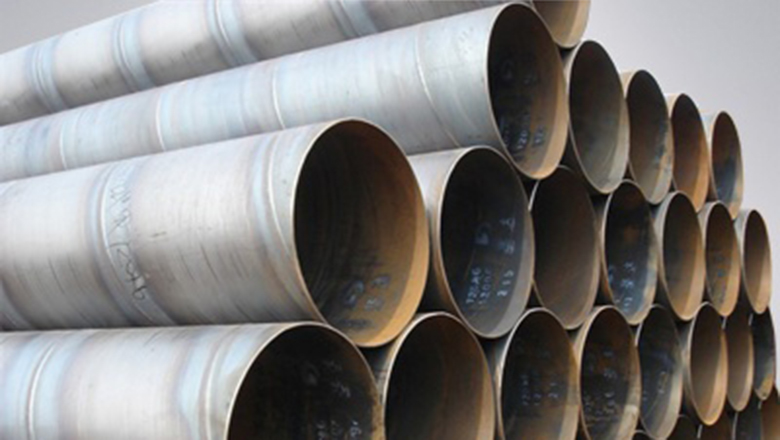
Pipe piles are cylindrical steel tubes driven deep into the ground to transfer structural loads to stable soil or rock layers. Their hollow shape allows for different applications, including:
- Open-Ended Piles – Soil enters the pipe during driving, creating internal resistance.
- Closed-Ended Piles – A plate or cap is welded to the bottom, increasing end-bearing capacity.
Pipe piles are especially effective in marine construction, bridges, and high-rise foundations where both strength and versatility are required.
What Are H-Piles?
H-piles, also known as H-section piles, are steel beams with an H-shaped cross-section. They are driven vertically into the ground to support foundations. Key features include:
- Uniform Cross-Section – Provides excellent strength for end-bearing applications.
- Ease of Driving – The shape allows piles to penetrate dense soils and rock efficiently.
- Structural Consistency – Performs well in load transfer for bridges, retaining walls, and heavy industrial structures.
H-piles are often chosen when projects require penetration into harder soil layers or when minimal displacement of surrounding soil is necessary.
Key Differences Between Pipe Piles and H-Piles
1. Load-Bearing Mechanism
- Pipe Piles rely on both skin friction (along the sides of the pile) and end-bearing capacity.
- H-Piles primarily transfer loads through end-bearing, making them highly effective in rocky or dense soil conditions.
2. Soil Displacement
- Pipe Piles displace more soil during installation, which can increase resistance and load capacity but may cause ground movement.
- H-Piles displace minimal soil, reducing the risk of disturbing nearby structures.
3. Versatility
- Pipe Piles can be used open- or closed-ended, filled with concrete, or left hollow, offering flexibility.
- H-Piles are more specialized and typically used where deep penetration into hard strata is required.
4. Applications
- Pipe Piles are common in marine environments, offshore platforms, bridges, and buildings requiring both axial and lateral load resistance.
- H-Piles are favored for retaining walls, deep foundations in rocky terrain, and heavy industrial projects.
5. Durability
- Pipe Piles can be coated, filled, or reinforced to enhance durability in corrosive environments.
- H-Piles may require protective coatings but generally perform well in non-marine applications.
Choosing the Right System
The decision between pipe piles and H-piles depends on several factors:
- Soil conditions – Soft soils favor pipe piles, while rocky terrains are better suited for H-piles.
- Load requirements – Projects with high lateral loads may benefit from pipe piles.
- Environmental factors – Marine or corrosive settings often demand pipe piles with additional protection.
- Project budget and timeline – The ease of driving H-piles can sometimes reduce costs in suitable soils.
Final Thoughts
Pipe piles and H-piles both provide reliable foundation solutions, but their differences in design, application, and performance make them suitable for distinct conditions. While H-piles excel in dense and rocky terrains, pipe piles offer greater versatility and adaptability across a range of environments.