

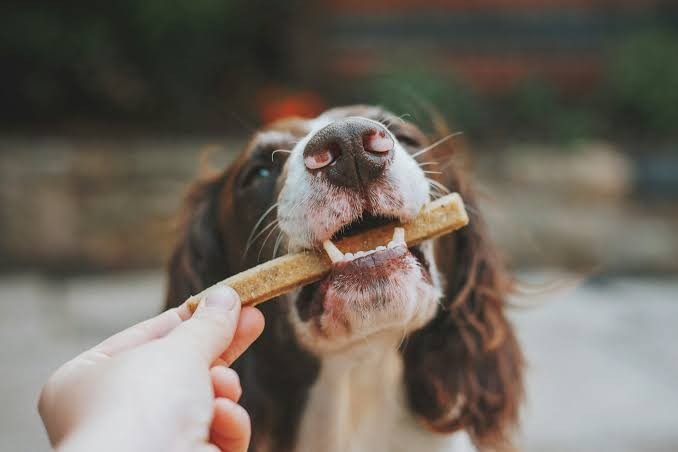
Chewing Is a Need, Not a Habit
Dogs chew because they are biologically built to chew. The jaw musculature, the drive to work through resistant material, the satisfaction of a completed task — these predate domestication. A dog without adequate chewing outlets does not stop needing to chew. It finds other outlets: furniture legs, shoe leather, baseboard corners. Providing appropriate chewing resources is management, not indulgence.
The mistake most owners make is not failing to provide chews — it is providing the wrong ones for their specific dog. A soft chew disappearing in four minutes satisfies a different dog than one requiring forty minutes of sustained attention. A chew too hard for a specific dog’s bite force can fracture teeth. Understanding hardness, duration, caloric density, and protein source is what turns the chew aisle from overwhelming to navigable.
The Categories and What Each Is Good For
Dog chews break into a few broad categories with different purposes. Single-ingredient natural chews — bully sticks, beef trachea, tendons, lamb ears, pig ears — are minimally processed and ingredient-transparent. The protein source is clear, the processing is minimal, and what the label says is what is in the product. This matters for dogs with food sensitivities, where the same protein in a chew can trigger the same reaction as in food. Single-ingredient chews vary considerably in hardness and duration.
Dental chews operate on a different premise — designed to mechanically reduce plaque and tartar through texture and shape, sometimes combined with enzymatic ingredients. The Veterinary Oral Health Council tests dental products in controlled clinical trials and maintains a list of products that have demonstrated measurable efficacy. The dental claim on many chew products is marketing rather than evidence. A chew with VOHC certification has been tested; one without it may or may not work for dental hygiene regardless of packaging claims.
Long-lasting chews — antlers, compressed rawhide, yak cheese blocks — are designed for dogs who need extended occupation. These work well during owner work hours or high-stress periods. The supervision question is product and dog-specific: any chew that can be broken into swallowable pieces should be monitored, particularly in aggressive chewers.
Calories, Safety, and Introducing New Options
The American Kennel Club recommends keeping treats and chews combined to no more than ten percent of daily caloric intake. For a 50-pound dog on 1,200 calories per day, that is 120 calories — which a single standard bully stick can approach. This is not a reason to avoid chews, but it is a reason to account for them, particularly during periods of high overall treat volume.
Introducing a new protein source in a chew deserves the same caution as introducing it in food. Dogs who have never had venison or rabbit may react in chew form the same way they would in their diet. Starting with a partial chew and monitoring for 24 hours before establishing it as a regular item avoids discovering a sensitivity at the cost of a digestive incident.
Any chew worked down to a size small enough to swallow should be removed before the dog attempts exactly that. The last inch of a bully stick, the small remaining piece of a dental chew — this is the moment when what was safe for an hour becomes a choking risk. Bully stick holders that block access to the final portion are a practical solution for dogs who tend to swallow rather than spit out the remainder.