


Early childhood is a time of exploration, discovery, and rapid learning. Every experience during these formative years shapes cognitive growth and emotional well-being. Engaging in activities that encourage expression and creativity plays a significant role in building essential skills. Theater is a dynamic medium that provides a structured yet playful way for children to develop communication, critical thinking, and confidence.
Storytelling and dramatic play immerse young minds in imaginative scenarios, encouraging them to express emotions and interpret different perspectives. Children’s theater introduces an interactive approach where participants actively engage in narratives, strengthening their ability to listen, react, and articulate thoughts effectively. This process enhances linguistic abilities while promoting social development and self-awareness.
1. Develops Strong Communication Skills
Engaging in theatrical performances encourages clear speech, effective articulation, and expressive body language. Acting out stories and dialogues improves vocabulary while reinforcing sentence structure and pronunciation. Group performances require active listening and turn-taking, helping children recognize the importance of patience and attention. Memorizing lines and responding to prompts also strengthen cognitive processing, ensuring better retention of information.
2. Strengthens Imagination and Creative Thinking
Theater transforms ideas into reality through role-playing and dramatic storytelling. Stepping into different characters encourages flexible thinking and adaptability, vital skills for problem-solving and innovation. Children learn to build scenarios, invent solutions, and explore diverse viewpoints, enhancing creativity. Constructing settings and improvising dialogues stimulate logical reasoning and emotional intelligence. Imagining various roles nurtures the ability to empathize with different perspectives.
3. Encourages Emotional Growth and Social Interaction
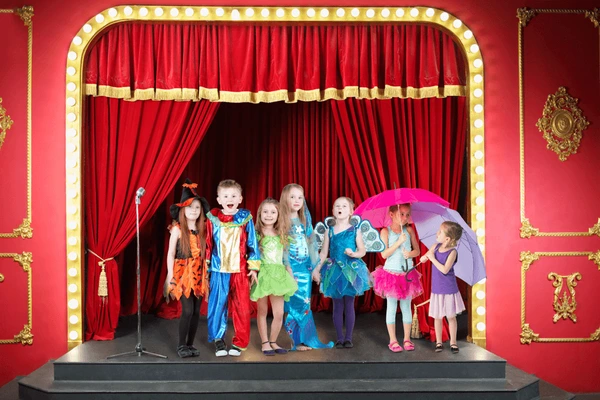
Performing in front of an audience teaches children how to manage emotions and respond to feedback constructively. Expressing feelings through drama provides an outlet for understanding and processing emotions, reducing hesitation in expressing thoughts. Participating in group activities promotes teamwork, ensuring a cooperative and inclusive environment. Interaction with peers during rehearsals strengthens collaboration and respect for different viewpoints.
4. Enhances Memory and Concentration
Theater demands focus and commitment, requiring participants to recall dialogues, stage directions, and sequences. Repeating lines, practicing movements, and synchronizing with co-actors reinforce attention to detail and memory retention. Exposure to different scripts introduces new words and sentence structures, enriching linguistic development.
- Active participation in storytelling improves cognitive flexibility, helping children adapt to new ideas
- Structured performances encourage discipline and organization, essential for managing tasks efficiently
- Regular rehearsals refine multitasking abilities, strengthening time management and problem-solving skills
5. Builds Self-Confidence and Expression
Stepping onto a stage encourages children to overcome hesitation and self-doubt. As they perform in front of an audience, they develop assurance in their abilities. Rehearsing lines, perfecting gestures, and conveying emotions contribute to self-expression and clarity in speech.
Small achievements, such as delivering a well-practiced line or successfully enacting a scene, motivate further growth. Encouragement from peers and instructors strengthens self-belief, leading to an increased willingness to participate in discussions and creative activities.
A Gateway to Performing Arts for Young Learners
Introducing children to performing arts early boosts their creativity, confidence, and communication. Interactive programs mix education with drama, creating a fun space for self-expression. Young learners engage with storytelling, movement, and emotions.
For families looking to cultivate their child’s artistic potential, finding the right institution is important. It should specialize in immersive theater experiences, workshops, and interactive performances. Through hands-on activities, children can build essential life skills while enjoying the magic of the stage.
Theater is an enriching tool that enhances early learning by fostering imagination, communication, and self-confidence. Children’s theater provides an engaging way to develop linguistic abilities, problem-solving skills, and emotional intelligence. Encouraging participation in storytelling and performance ensures that young learners develop essential life skills while nurturing creativity in a supportive environment.