


Home moving boxes and furniture
When you’re planning a move during your retirement, there’s a lot on your mind. You may be thinking about saying goodbye to your longtime home, sifting through items you’ve accumulated over many years, figuring out how family can help and imagining how you’ll get accustomed to a new routine.
Start With the Size and Layout of the New Space
It’s all a lot to take in, and while the physical work of moving is important to consider, the emotional and logistical sides of the process can end up being even more work. Having a thoughtful moving plan can help alleviate some of the stress by helping you figure out in a step-by-step fashion what you need to keep, what should be donated and what will need to be in place when moving day arrives.
Here’s one helpful tip to keep in mind: instead of starting the downsizing process by going through your belongings room-by-room in your current home, it can be helpful to start by getting a sense of the size and layout of your new space. This will help you figure out what items of furniture you can take with you.
Think about it this way: that large couch that fills up your roomy living room just right could end up overwhelming a smaller apartment or senior living suite.
Furniture and boxes for a home move
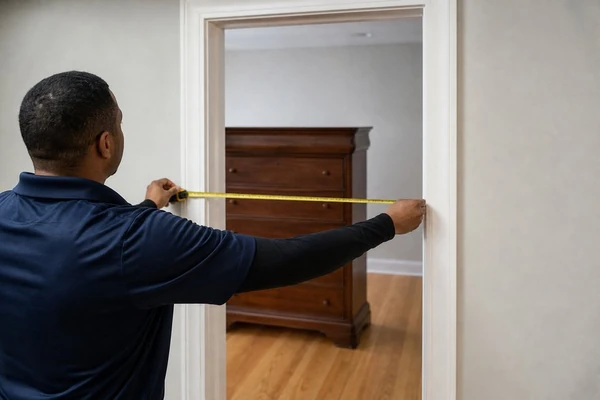
Professional movers will also typically check doorways for large pieces of furniture. Sometimes just a couple of inches can make all the difference in whether or not a bed frame, dining table or recliner will fit through a door without having to be disassembled.
Try making a rough sketch of your new place, keeping in mind:
- The must-have furniture pieces you’ll need for eating, relaxing and sleeping
- Any built-in or additional storage you’ll have for items like paper goods, linens and seasonal items
- Things you may want to have closer to an entryway for easier access
- Any space you’ll need to keep open for mobility purposes, such as around a walker or wheelchair, or pathways that will need to be kept clear
By approaching downsizing this way, you’re making more logical decisions based on your needs and available space, instead of agonizing item-by-item.
Sort Belongings in Smaller Categories
Of course, once you know what will fit into your new place, you’ll still need to go through everything you currently own and decide what to do with the rest. Tackle this project in small categories to make it more manageable. For example, instead of going through your whole kitchen at once, try just focusing on sorting through extra pots and pans, or start by sifting through old linens. Try starting with things that don’t hold as much sentimental value, like décor, and save more personal items like family photos and documents for later on.
Keep these sorting categories in mind:
- Keep for your new place
- Give to friends or family
- Donate, sell or recycle
- Throw away responsibly
Try to avoid making the “unsure/maybe” category your biggest one! It’s ok to keep a small staging area set aside, but try not to end up with a ton of boxes you haven’t yet gone through, otherwise you run the risk of just moving all of that indecisiveness to your new place!
Also note that some items may need to be thrown away responsibly, including electronics, paint, batteries; https://www.epa.gov/hw/household-hazardous-waste-hhw is the page that actually explains it, medications and certain documents. Check with local regulations and requirements for the best ways to get rid of these items responsibly, and avoid tossing them in with the rest of your packing materials.
Ask for the Specific Help You Need
There are also lots of professional moving services that can help with the nitty-gritty of the moving process, from unpacking and setting up your new place to making donation runs, move-in supervision, and more. The practical side of moving companies for seniors in Tulsa starts there.
Prepare for the First Day and Week
You don’t want to end up digging through 20 boxes on the first night just to find your pajamas, medication or cell phone charger! Keep a clearly-marked box or suitcase with all your must-have items, and try transporting it separately from the rest of your stuff if possible. This bag should include:
- Important documents, ID and keys
- Essential medications & medical information
- Phone chargers, eyeglasses, hearing aid batteries/supplies
- Snacks, water and easy-to-prepare foods
- Toiletries & a change of clothes
- Bed linens, towels and any necessary mobility equipment
Instead of just labeling boxes with the corresponding room (like “Kitchen”), consider adding “Open First” to the label on boxes with the most important items (labeled as Kitchen Open First).
Try unpacking the most essential rooms first (think bedroom, bathroom, kitchen and living area), and hold off on unpacking décor and less frequently-used items for a bit.
Once you’re settled in, also double-check your furniture arrangements to make sure everything flows well and walkways are still accessible, keep an eye out for your mail, and make sure you have easy access to anything you need often.
Before moving day, consider packing a labeled suitcase or bag with important documents, medications, eyeglasses, chargers, keys and anything else you absolutely need, including what you’ll be sleeping in that first night!